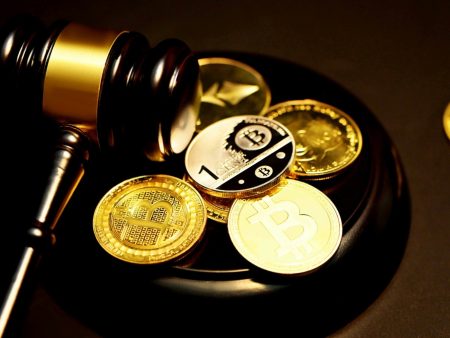
Looking ahead to 2026, many financial analysts, large institutions, and market influencers agree that Bitcoin and the wider crypto market are about to change in a big way. The old four-year halving cycle is fading, making way for a more stable, institutionally backed asset class. Bitcoin is no longer just a speculative experiment; by 2026, it stands as a key part of the global digital financial system.
1. Bitcoin Price Predictions for 2026: The Influencer View
Most experts predict that Bitcoin’s price in 2026 will be strong but more stable. After the big swings of 2025, 2026 is expected to bring steady growth or new highs.
| Arthur Hayes | $200,000 – $500,000 | Driven by “global liquidity flooding into risk assets.” |
| Standard Chartered | $150,000 – $200,000 | Driven by ETF inflows and sovereign adoption. |
| Bernstein | $150,000 | Expects Bitcoin to reach this “cycle high” by late 2025/early 2026. |
| Bitwise | New ATHs | Predicts the end of the 4-year cycle; steady upward growth. |
| Cathie Wood (ARK) | $500,000 (Base Case) | Originally projected for 2026; now sees $1.2M+ by 2030. |
| Nasdaq Analysts | $130,000+ | Bitcoin emerging as the primary “Digital Gold” hedge. |
The Visionaries: Quotes from the Front Lines
Michael Saylor, Executive Chairman of MicroStrategy, remains the leading voice for Bitcoin is essential role. Going into 2026, he sees Bitcoin not as a trade but as the best way to avoid losing value through currency devaluation.
“Bitcoin is the first global, digital, private, rules-based monetary system in the history of the world… It’s not just a better way to do banking; it’s a better way to store the work of your life.”
Cathie Wood, CEO of ARK Invest, has updated her short-term outlook on stablecoins, but she remains very optimistic about institutions adopting Bitcoin. She thinks that by 2026, it will be so easy for institutions to buy Bitcoin that not owning it could be seen as a risk.
“Bitcoin is a technology, a global monetary system, and a new asset class all wrapped in one. We have just started, so we have a long way to go. It is a very big idea.”
Arthur Hayes, co-founder of BitMEX, looks at the bigger economic picture. In late 2025, he pointed out that the biggest change of the decade is the return of quantitative easing (QE), even if it goes by new names.
“While investors are focused on charts and short-term sentiment, the real driver will be global liquidity flooding into risk assets… Crypto is entering a phase where the surviving assets don’t just recover, they dominate.”
2. Key Market Trends for 2026
The “Death” of the Four-Year Cycle
In the past, Bitcoin usually followed a four-year cycle: three years of growth, then a steep drop. But analysts at Bitwise and Coinbase say this pattern is changing. As big institutions like BlackRock and Fidelity get involved and the 2024 halving has less effect, Bitcoin’s price is expected to be steadier and more tied to global economic trends.
Anthony Pompliano, founder of Professional Capital Management, says that big price drops are happening less often because short-term traders are being replaced by long-term investors through ETFs.
“A 35% drawdown in Bitcoin is now a ‘pretty healthy’ reset. We are separating the ‘gambling table’ from the ‘long-term lounge.’ The institutional era means the asset stays in the hands of people who aren’t looking to sell next week.”
Institutional “DAT 2.0”
The idea of companies just holding Bitcoin as part of their treasury is evolving. By 2026, experts expect a move to DAT 2.0, in which countries and large companies view blockchain block space as an important digital resource. Using Bitcoin as a strategic reserve, once seen as extreme, gained real political support in the U.S. and elsewhere after the 2024 elections.
The Rise of AI Economic Actors
2026 is expected to be the year when AI agents start making their own transactions. Since these AI agents can’t easily open bank accounts or pass KYC checks, they will likely use crypto-based systems instead. Stablecoins and the Lightning Network are set to become the main ways for these machines to pay each other, which will greatly increase demand for blockchain space.
Stablecoins as Global Infrastructure
Stablecoins like USDC and USDT could reach a market cap of over $1 trillion by the end of the decade. In 2026, more regional banks and governments in emerging markets are expected to use stablecoins for cross-border payments. As Cathie Wood said, stablecoins are taking over some of the payment roles once expected for Bitcoin, while Bitcoin is becoming the top “Digital Gold.”
3. Human Opinion: The “Sentiment” of 2026
If 2021 was all about retail excitement and 2024 was about institutions getting on board, then 2026 is shaping up to be the year when Bitcoin proves its usefulness and gains full legitimacy.
People’s views on the market are changing from wondering if Bitcoin will last to figuring out how to invest in it. Bitcoin’s price swings are shrinking, making it act less like a risky tech stock and more like a fast-growing version of Gold or Nvidia.
The Shift in Retail Perspective
By 2026, most people will be able to access Bitcoin through their retirement plans, banking apps, or even payroll. The old fear of missing out has turned into a fear of being left behind. This change matters because when something goes from being too risky to ignore, its price tends to stay higher.
The Risks:
- Regulatory Friction: The US has made progress, but laws like “The Clarity Act” and similar rules worldwide have mixed effects. Clear regulations attract large investors, but the cost of complying with them could hurt smaller, decentralized projects.
- Macro Environment: If 2026 brings a global recession or interest rates stay high, Bitcoin’s status as a risky asset will be challenged. It could fall with the stock market or act as a safe haven. Influencers like Raoul Pal say that Bitcoin’s alignment with the decline of traditional money is the key long-term factor.
4. The Broader Ecosystem: Beyond Bitcoin
Bitcoin is still the main asset, but 2026 could also be a big year for the “Magnificent Five” in crypto. Arthur Hayes lists these as Bitcoin, Ethereum, Solana, Zcash, and Ethena.
- Ethereum is expected to stay the top public blockchain for institutions looking to tokenize real-world assets.
- Solana is likely to lead the way in consumer-focused decentralized apps because it is fast and affordable.
- The total value locked in DeFi could hit $200 billion by the end of 2026, thanks to AI agents and institutional lending platforms.
Conclusion
The outlook for 2026 is positive but cautious, with some experts even discussing a “Super-Cycle.” While Bitcoin may no longer see 1,000% yearly gains, it is becoming a solid, multi-trillion-dollar asset. Experts like Saylor, Wood, and Hayes agree that its price is likely to stay well above $100,000.
As the market grows, the main focus in 2026 will be on combining AI with blockchain, turning global debt into digital tokens, and treating Bitcoin as global digital property rather than just a cryptocurrency. As Michael Saylor says, “There is no second best.” By 2026, the world might finally agree.